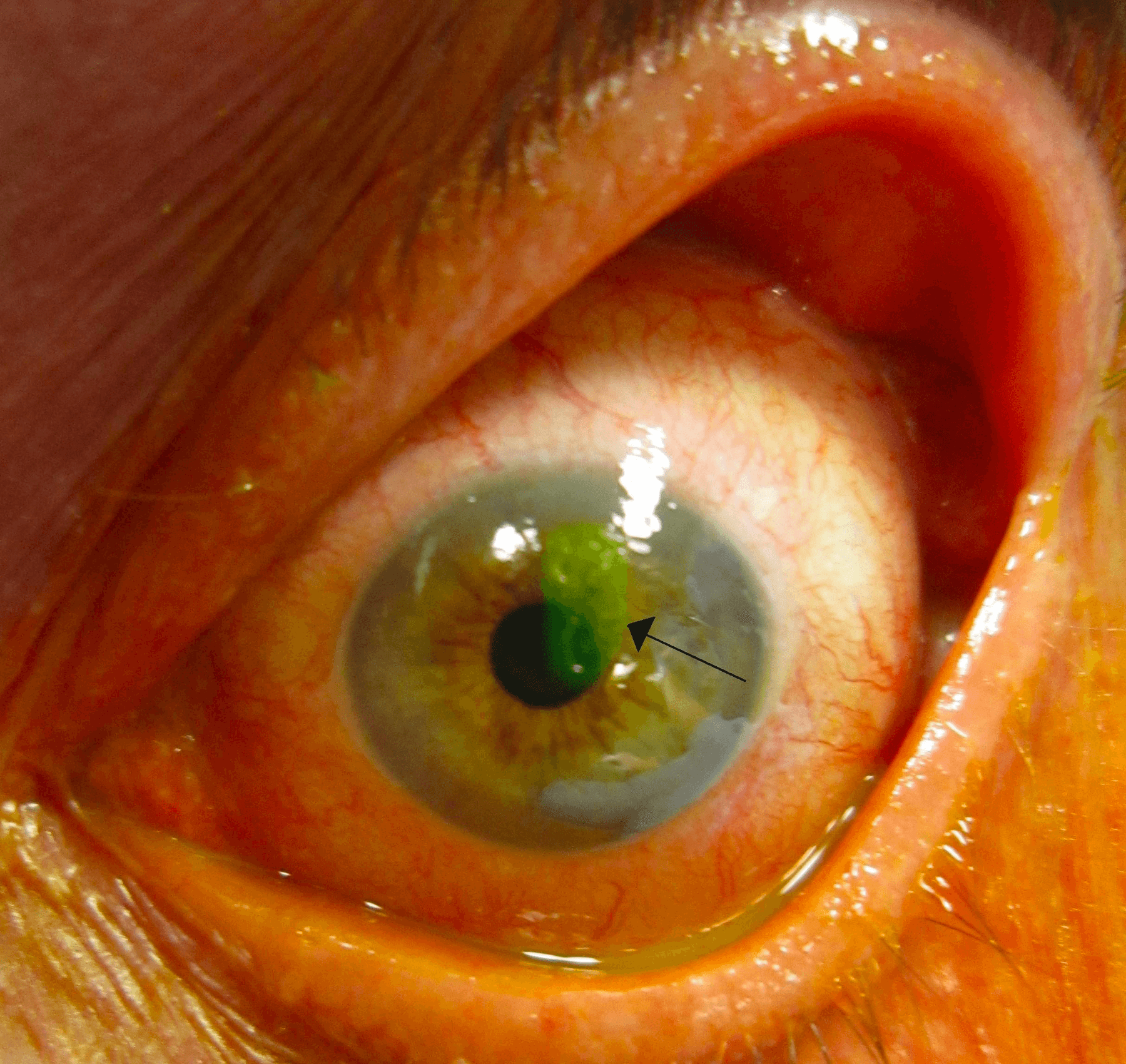
A 28-year-old female contact lens wearer presents to the clinic with complaints of a painful and red left eye over the past 24 hours. She reports accidentally falling asleep while wearing her contact lenses last night and had spent much of the day doing yard work. On exam, you note conjunctival injection and a 3 mm corneal abrasion on fluorescein stain. Visual acuity is 20/25 in both eyes. What is the most appropriate initial management for this patient?
[A] Removal of contact lenses and initiation of topical antibiotics with close follow up
[B] Application of a patch and topical lubricants
[C] Immediate emergency referral to an ophthalmologist for further evaluation
[D] Administration of oral analgesics and reassurance
Scroll down to find the answer at the end! 👇
Need to refresh your memory before answering this question? Head over to Pathway to review the latest guidelines on Corneal Abrasion, as well as some landmark trials.
|
Case Conclusion
Keep your clinical skills sharp
|
Answer - A. Removal of contact lenses and initiation of topical antibiotics with close follow up
Explanation - This patient's clinical presentation is consistent with Corneal Abrasion, a condition in which the cornea gets scratched or injured. The most appropriate initial management for this patient is to remove the contact lenses immediately to prevent further irritation and friction on the injured cornea, followed by the initiation of topical antibiotics to reduce the risk of bacterial infection. In contact lens wearers, it is important to initiate therapy with an agent with activity against pseudomonas, such as ciprofloxacin.
Options such as applying a patch and topical lubricants are no longer recommended. Immediate emergency referral to an ophthalmologist is unnecessary for a straightforward corneal abrasion like in this case but would be recommended if not improving over the next several days or if there are any worsening symptoms or changes in vision. Administration of oral analgesics and reassurance may provide pain relief but does not address the risk of infection or promote corneal healing.
|
What are the guideline recommendations for topical medical management of corneal abrasion?
-
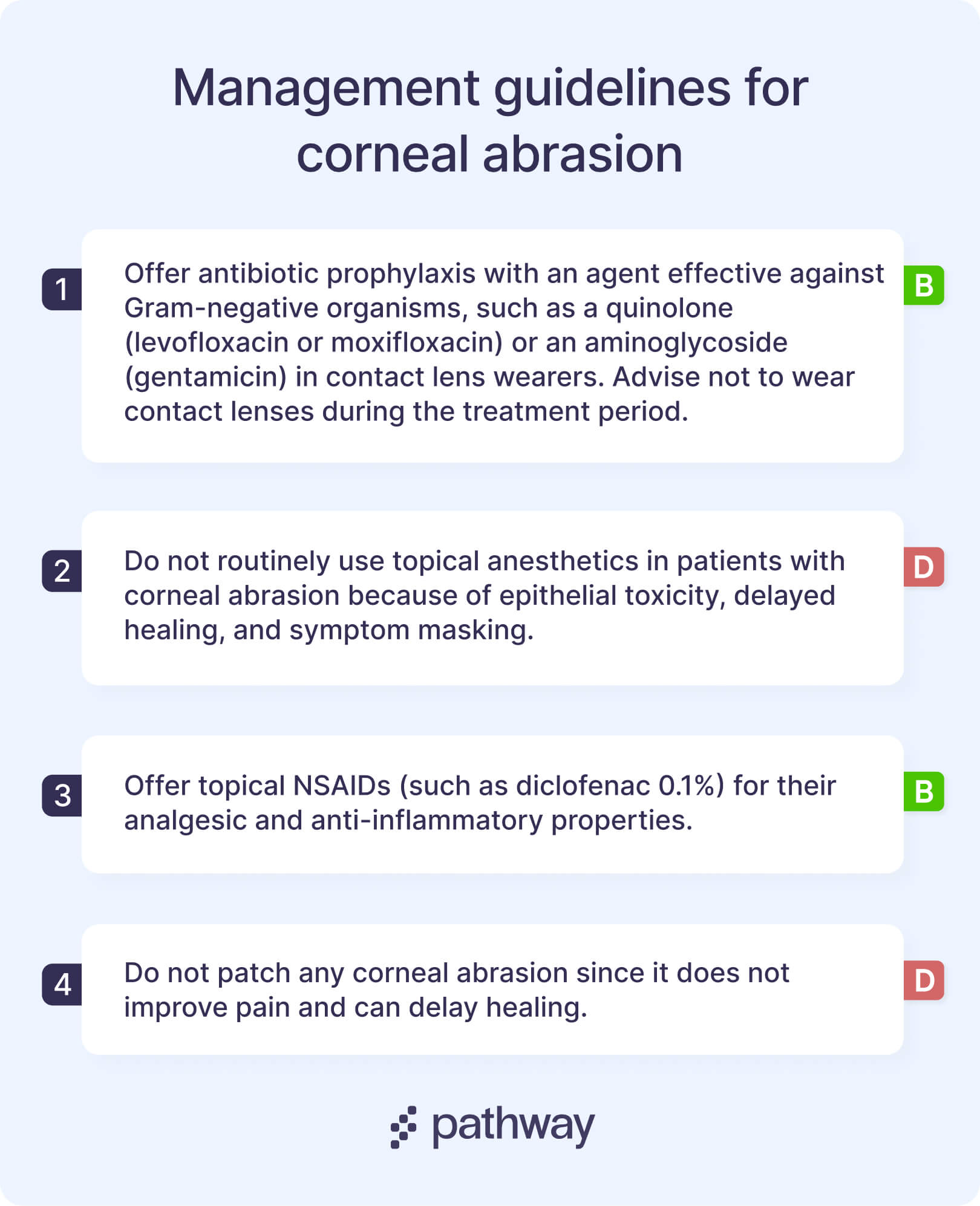
Offer antibiotic prophylaxis with an agent effective against Gram-negative organisms, such as a quinolone (levofloxacin or moxifloxacin) or an aminoglycoside (gentamicin) in contact lens wearers. Advise not to wear contact lenses during the treatment period. (B)
-
Offer topical anesthetics (such as proxymetacaine 0.5% or oxybuprocaine 0.4%) to aid examination, if necessary. (B)
-
Do not routinely use topical anesthetics in patients with corneal abrasion because of epithelial toxicity, delayed healing, and symptom masking. (D)
-
Offer topical NSAIDs (such as diclofenac 0.1%) for their analgesic and anti-inflammatory properties. (B)
-
Consider offering cycloplegics (such as cyclopentolate 1% BID until healed) to alleviate ciliary spasm in patients with large corneal abrasions or associated iritis. (C)
-
Do not use topical cycloplegics and mydriatics to relieve pain in patients with uncomplicated corneal abrasion. (D)
- Offer systemic analgesics (such as ibuprofen or acetaminophen) for the first 24 hours, if necessary. (B)
|
What are the guideline recommendations for non-pharmacological management of corneal abrasion?
-
Counsel on suitable eye protection in patients with corneal abrasion. (B)
- Advise wearing sunglasses in patients with corneal abrasion. (B)
-
Do not patch the eye in patients with contact lens use-related corneal abrasion because of the increased risk of bacterial keratitis. (D)
-
Do not patch any corneal abrasion since it does not improve pain and can delay healing. (D)
- There is insufficient evidence to support the use of bandage contact lenses in the management of corneal abrasions. (I)
- Offer ocular lubricants for symptomatic relief (drops as needed during the day, unmediated ointment at bedtime) in patients with corneal abrasion. (B)
|